ServicesStorm Damage Repair
Storm Damage Repair in Fernandina Beach
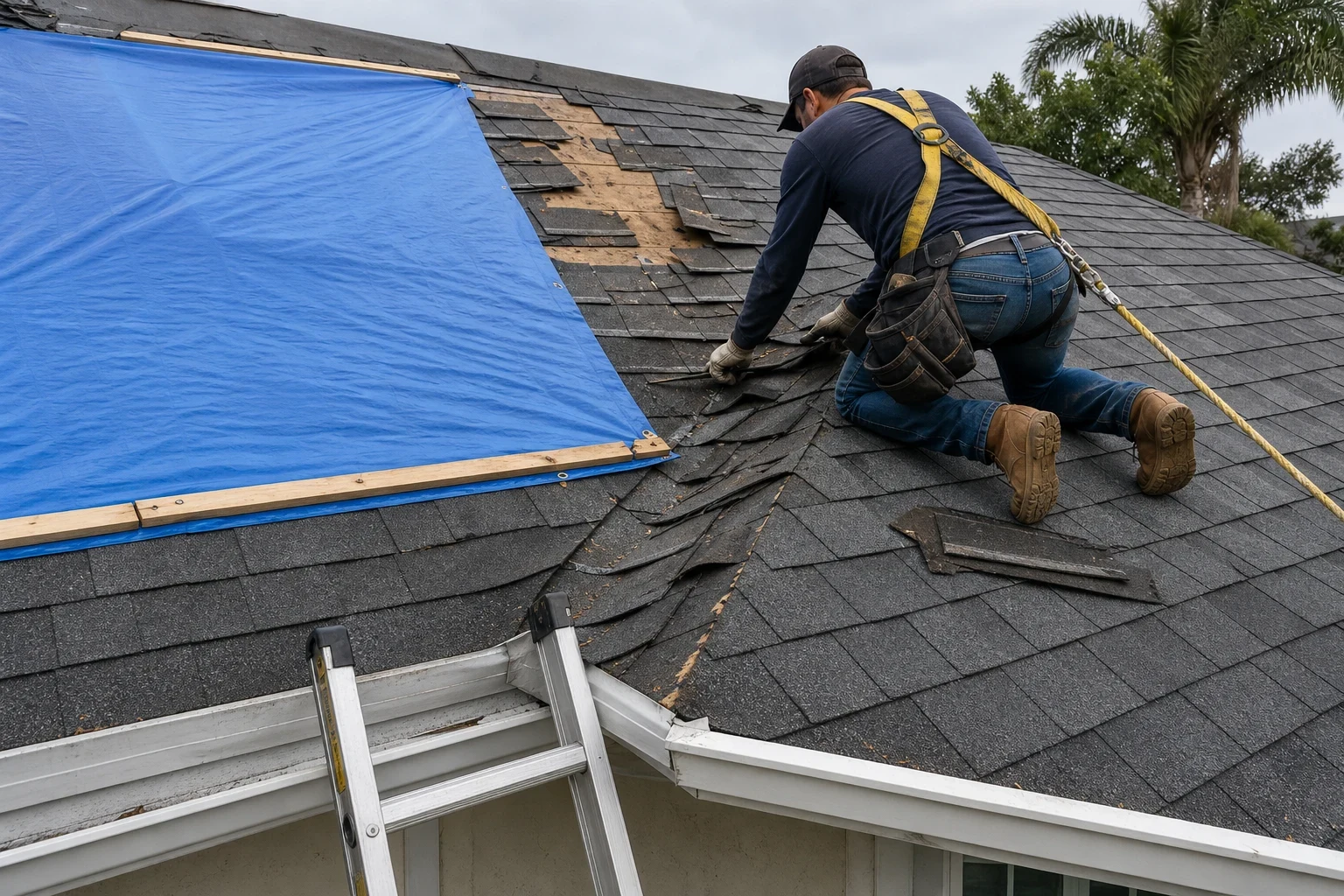
After a storm passes, we inspect your roof at no cost, photograph every lifted shingle, torn flashing seam and soaked deck board, and give you a written repair plan. Then we fix the damage properly so your home is sealed before the next round of weather.
What storm damage does to a roof
Most storm damage starts small. Wind gets under the edge of a shingle and breaks the adhesive strip that holds it down. The shingle flaps, creases across its width, and stops shedding water even if it never blows off. Flashing at walls and vent pipes can pull loose the same way, and wind-driven rain then runs behind it into the decking.
Here, the season matters. Summer thunderstorms, hurricane season from June through November and fall nor'easters can hit the same roof several times in one year. A shingle loosened in August may be gone by October. That is why we treat storm damage repair as preparation for the next storm, not just cleanup after the last one.
Some roofs only need a section rebuilt. Others are past saving, and in that case we will say so and talk through roof replacement or metal roofing with you.
What our storm repair work covers
Shingle and ridge cap replacement
We replace missing and creased shingles and blown-off ridge caps, then hand-seal the surrounding tabs that lost their bond. New shingles go down with the correct nail count and placement so they resist uplift the way the manufacturer intended.
Flashing and penetrations
Step flashing, wall flashing, pipe boots and vent collars get refastened or replaced. Cracked rubber pipe boots are a common leak point after high wind, so we check every one.
Decking and underlayment
Where water has reached the plywood or OSB, we open the area, replace soft or delaminated sheets, and lay new underlayment before the shingles go back on.
Metal roof panels and trim
On metal roofs we tighten or replace backed-out fasteners, swap worn washers, and repair bent panels and trim. Loose fasteners let panels vibrate in the next wind and widen the holes.
Gutters and drip edge
High wind and falling limbs can kink a gutter run or peel the drip edge away from the fascia. We straighten, refasten or swap out those pieces, because a sagging gutter dumps rainwater against the fascia board and starts rot there. Bigger gutter problems are covered on our Gutters page.
What storm damage looks like from the ground and the attic
Debris on the lawn
Finding torn shingle tabs, ridge cap or bits of metal trim around your home after a blow is a clear sign the roof now has an opening somewhere above.
A crease across the shingle
A straight horizontal line near the top of a shingle tells us it lifted and folded in the wind. It may look fine from the street but will not seal back down on its own.
New ceiling or attic stains
Brown rings on drywall or damp insulation after a storm usually point to failed flashing or a lifted shingle. Water can travel along rafters, so the stain is not always under the leak.
Heavy granules in the gutters
Hard rain and blown debris strip the protective granules off asphalt shingles. Bare spots age quickly in Florida sun and start leaking within a few seasons.
Dents, holes or loose panels
Falling limbs puncture shingles and dent metal. A loose metal panel that rattles in moderate wind needs attention before the next strong blow.
From first look to final sweep
- 1
Free post-storm inspection
A technician climbs up, checks each slope and every flashing point, and looks in the attic if there is safe access. Every damaged spot is photographed with a short note on what caused it, and those pictures are yours to keep.
- 2
Temporary protection if needed
If the roof is open, we tarp and fasten the area so rain stays out while the claim and repair are scheduled.
- 3
Meeting the adjuster
If you file a claim, we can be on the roof when your adjuster visits and walk them through each documented item. Our role is to explain the damage; the adjuster and your insurer decide what is covered.
- 4
Written scope and repair
You get a line-item estimate before work starts. On repair day we protect landscaping, remove damaged material down to sound decking, rebuild the area and seal it.
- 5
Cleanup and final check
We haul off debris, run a magnet sweep for nails in the yard and driveway, and send photos of the finished work for your records.
What sets the cost of storm repairs
Storm repair prices depend on how much of the roof was affected and what we find under the surface. We price from the inspection, line by line, so you can match it against your insurance estimate. Financing is available if the repair falls between claims or under your deductible.
- How far the damage spreads
- Wind that lifted a handful of tabs on a single face of the roof means a quick repair. When the damage reaches multiple slopes, the ridge line and several flashing points, the material list and crew hours grow with it.
- Condition of the decking
- Wet or rotted sheathing has to be replaced before anything goes on top. We can only see this once the damaged shingles come off, and we photograph it before replacing.
- Matching existing materials
- Older or discontinued shingle colors and metal panel profiles can be hard to source, which affects both price and whether repair or replacement makes more sense.
- Code requirements
- Florida rules can require a damaged roof section to be brought up to current code when enough of it is repaired. That can add underlayment or fastening upgrades, and we flag it in the estimate.
Storm damage repair questions
Something not covered here? (904) 709-7261
Should I file an insurance claim before calling you?
You can call us first. Our post-storm inspection is free, and the photos help you decide whether the damage is worth a claim given your deductible. If you do file, you have documentation ready for the adjuster.
Do I have to explain the roof damage to the adjuster myself?
No. On a storm claim, we deal with the adjuster for you and speak the same technical language about flashing, decking and uplift. We can meet them at your home, point out what our photos show and answer their questions on the spot. Whether something is covered is still your insurer's call.
Can you match my existing shingles?
Often, yes, if the product line is still made. Older roofs may have faded or discontinued shingles, and we will show you how close a match we can get before you approve the work.
Is a small amount of damage worth fixing right away?
Yes. One creased shingle lets water reach the underlayment, and the next storm pulls on that weak spot first. Fixing it now is far cheaper than repairing wet decking later.
What if the roof is too damaged to repair?
We will tell you plainly and explain why, such as widespread brittle shingles or soft decking across a slope. From there we can talk through roof replacement, including metal roofing, and how insurance may apply.
Get your roof sealed before the next storm
We will inspect your roof, photograph what the weather did and lay out the repair in writing. Your estimate is free and carries no obligation.