ServicesRoof Inspections
Roof Inspections in Fernandina Beach, Timed to the Storm Calendar
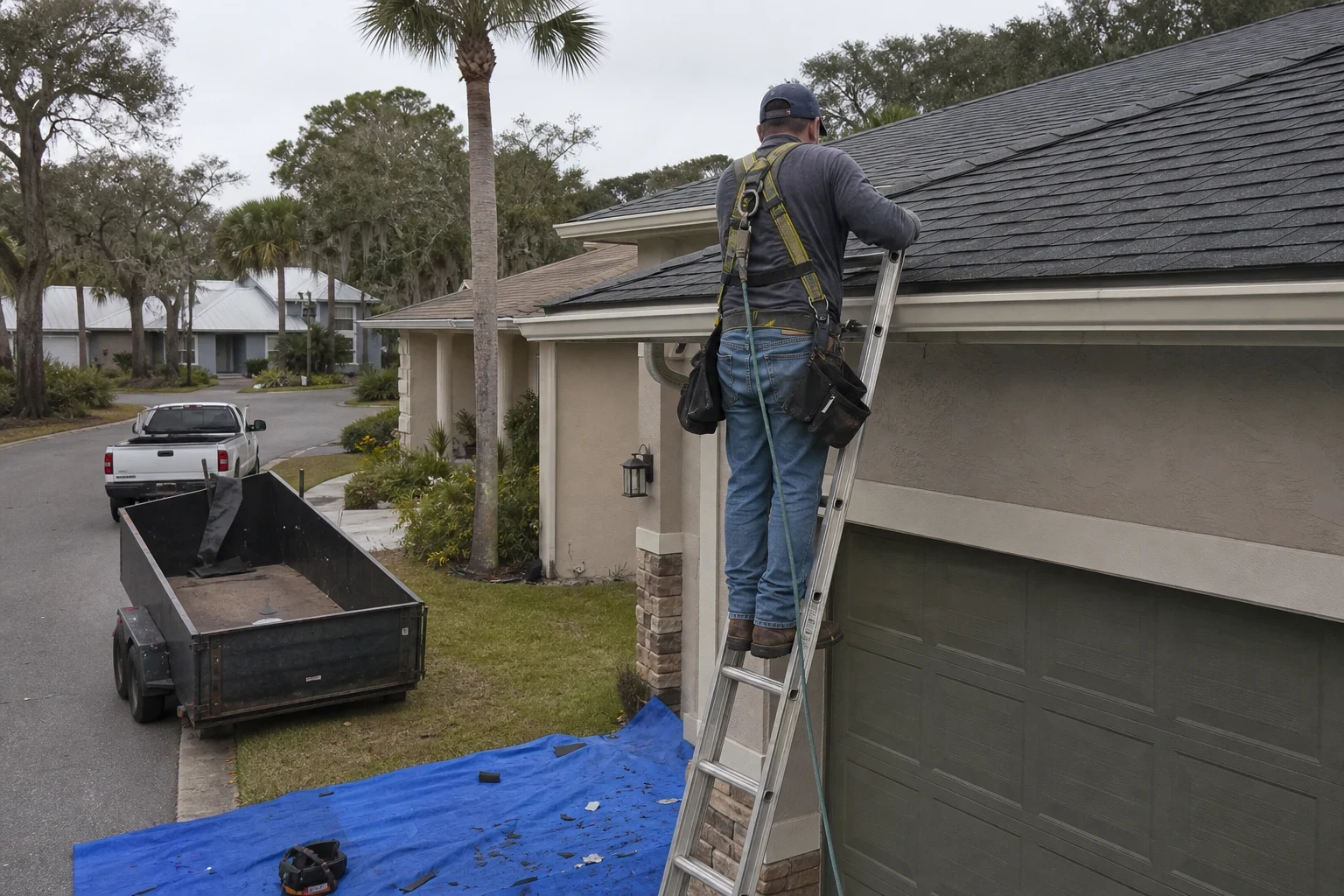
We check your roof from the ridge cap down to the drip edge and from inside the attic, then show you photos of every weak spot. You get a clear read on what will hold through the next storm and what needs attention first.
Why an Inspection Comes Before Any Repair
Most leaks begin at one weak point, not across the whole roof. It might be a lifted shingle tab, a cracked pipe boot, or a nail that backed out and let water run down its shank into the decking. Spotting those openings early, before wind-driven rain turns them into a stained ceiling or a spongy patch of deck, keeps the fix small.
Timing matters as much as thoroughness. Hurricane season runs from June through November, so the most useful inspection happens in spring, while there is time to make repairs on a calm schedule. The second most useful one comes right after a storm passes, when fresh damage is easy to see and easy to document.
Our job on an inspection is to report what we find, not to sell you a roof. If a few repairs will carry the roof through another season, we say so plainly.
What We Check on Every Inspection
- Shingles and fasteners
- We look for creased or lifted tabs, broken seal strips, missing granules and exposed nail heads. A broken seal strip is the first thing high wind exploits, so we test tabs by hand along the eaves and rakes.
- Flashing and roof penetrations
- Step flashing at walls, chimney counterflashing, valley metal and the rubber boots around plumbing vents all get a close look. Salt air speeds corrosion on exposed metal, and pipe boots crack from sun long before the shingles around them wear out.
- Decking from above and below
- We walk the field of the roof feeling for give that points to wet or delaminated plywood. Then we go into the attic to check the underside of the deck for staining, rot, rusted nail tips and daylight showing through.
- Ventilation and attic moisture
- Blocked soffit vents or a poorly working ridge vent trap hot, humid air. That moisture condenses on the deck, rusts fasteners and shortens shingle life, so we note intake and exhaust airflow and any mildew on the rafters.
- Gutters and downspouts
- Each gutter run should slope toward its downspout and sit snug against the fascia, with no packed granules or leaves holding water. When water pools behind a gutter, it soaks the fascia board and the roof edge above it. Anything that needs fixing is covered on our Gutters page.
- A photo report you keep
- Every finding is photographed and labeled by location. You get a plain list sorted into what should be fixed before storm season and what can wait.
Signs It Is Time for an Inspection
Spring is here and the roof has not been checked
Late winter and early spring give you months to fix problems before the first tropical system. Waiting until a storm is in the forecast leaves little time to schedule work.
A storm or nor'easter just passed
Even without a leak, strong gusts can break shingle seals or lift ridge caps. That damage often lets water in during the next rain, not the one that caused it.
Granules collecting in gutters or at downspouts
Loose granules mean the asphalt underneath is exposed to UV. Heavy granule loss usually signals shingles near the end of their service life.
Stains on ceilings or around vents
A brown ring on drywall is the last stage of a leak. The water may have entered several feet uphill, so the source needs to be traced from the roof and the attic.
Your roof is 15 years old or more
Asphalt shingles stiffen with age, and the adhesive that bonds each tab weakens after years of heat. A yearly check helps you plan a roof replacement on your schedule rather than after a failure.
What Affects the Cost of Follow-Up Work
Post-storm inspections are free, and so is the estimate that follows. What you might spend afterward depends on what we find. These are the factors that move the price of any repairs, and financing is available if the work is larger than expected.
How far the damage has spread
Small openings stay inexpensive to close. Leave a leaking pipe boot through a rainy season and the job can grow to include soaked decking and attic insulation.
Roof pitch and access
Steep slopes and second-story eaves require more safety setup and slow the work. Tight lot lines or landscaping against the house can also affect staging.
Roofing material
Matching older asphalt shingles, sourcing metal panels or trim, and working around tile all carry different labor and material costs.
Insurance-covered storm damage
When damage comes from a covered storm, your policy may pay for part of the repair. We work directly with your insurance adjuster and share our photos, so the claim reflects what is actually on the roof.
How Inspection Day Runs
- 1
A short talk before we climb
We ask about any leaks, past repairs and the roof's age. That tells us where to look hardest.
- 2
The roof surface
We walk the roof where the pitch allows it safely and photograph shingles, flashing, vents, valleys and edges. On steep or fragile sections we inspect from the ladder and the eaves.
- 3
The attic side
Inside, we check the deck underside, insulation, vents and any signs of water tracking along rafters. This is often where hidden damage shows first.
- 4
Findings walked through with you
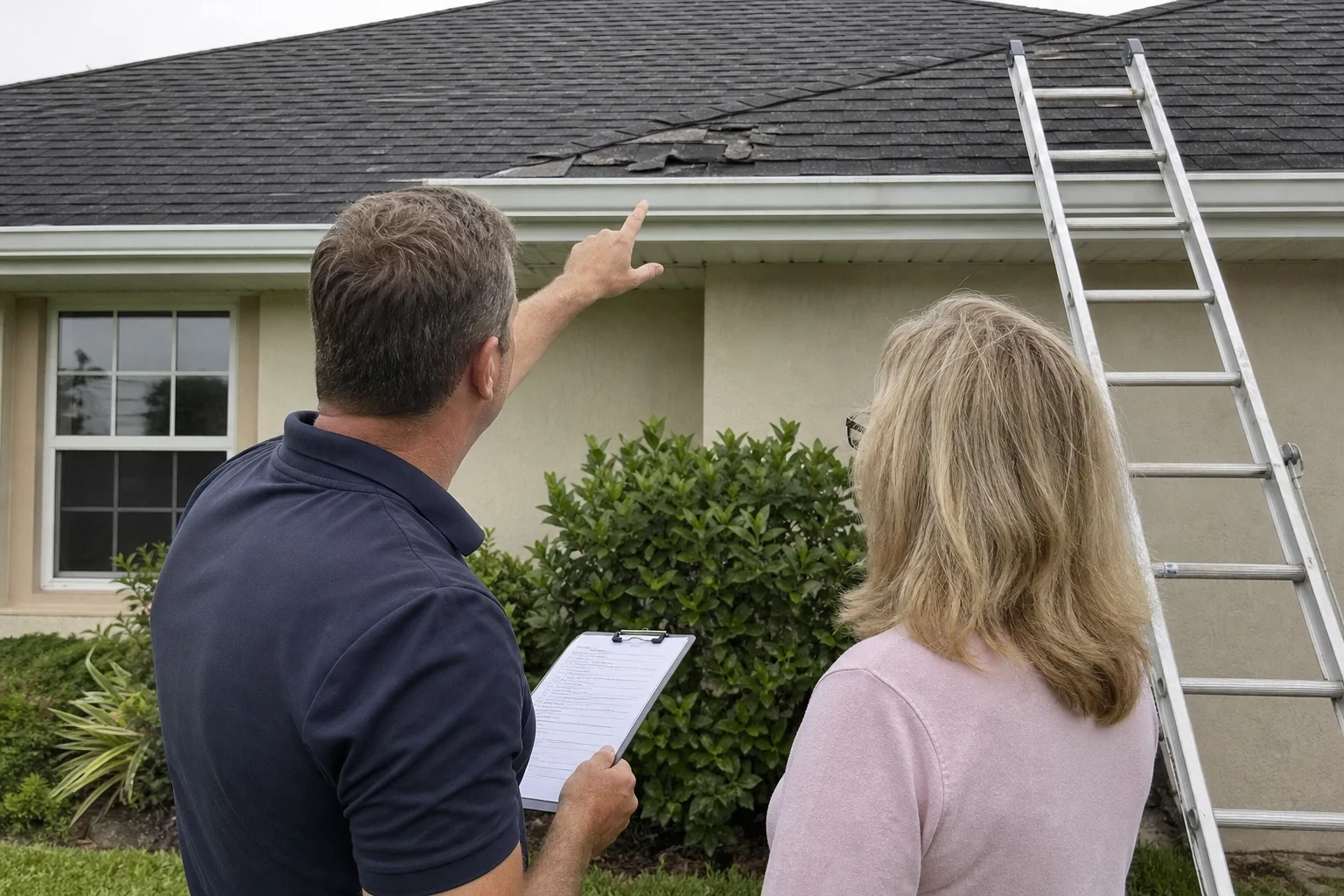
Before we leave we go over the photos and explain each item: what it is, why it happens and how urgent it is. If repair work makes sense, we give you a free, no-obligation estimate with each item listed separately.
Before You Schedule a Roof Check
How much of my day will the visit take up?
Plan on roughly an hour for a typical single-story roof. A second story, several valleys or a cluster of dormers adds time, and so does a cramped attic hatch. We set the pace by what the roof needs, so the photos and the closing walkthrough get done properly.
Do I need to be home while you're here?
It helps with two things: opening up the attic for us and going over the photos together on the spot. If your schedule doesn't allow it, we can cover the exterior and talk you through the pictures by phone afterward.
Is this the same as a four-point or wind mitigation inspection?
No. Those are specific insurance forms with their own requirements. Ours is a roofer's condition inspection focused on what needs repair. Our photos and notes can still be useful to share with your insurer or another inspector.
How often should my roof be looked at?
A yearly check each spring is a sensible baseline, plus another after any strong storm. Roofs past 15 years or with a history of leaks gain the most from keeping that routine.
Will you tell me I need a new roof?
Only if the evidence shows it. If targeted roof repair will keep the roof sound for several more seasons, that is what we recommend. When replacement does make sense, we explain why with photos and you decide when to move forward.
Get Your Roof Checked Before the Next Storm
Tell us about your roof and any concerns, and we will set a time to inspect it. You will get photos, a plain explanation and a free estimate for anything that needs work.