ServicesGutters
Gutters in Fernandina Beach, Installed Before Storm Season
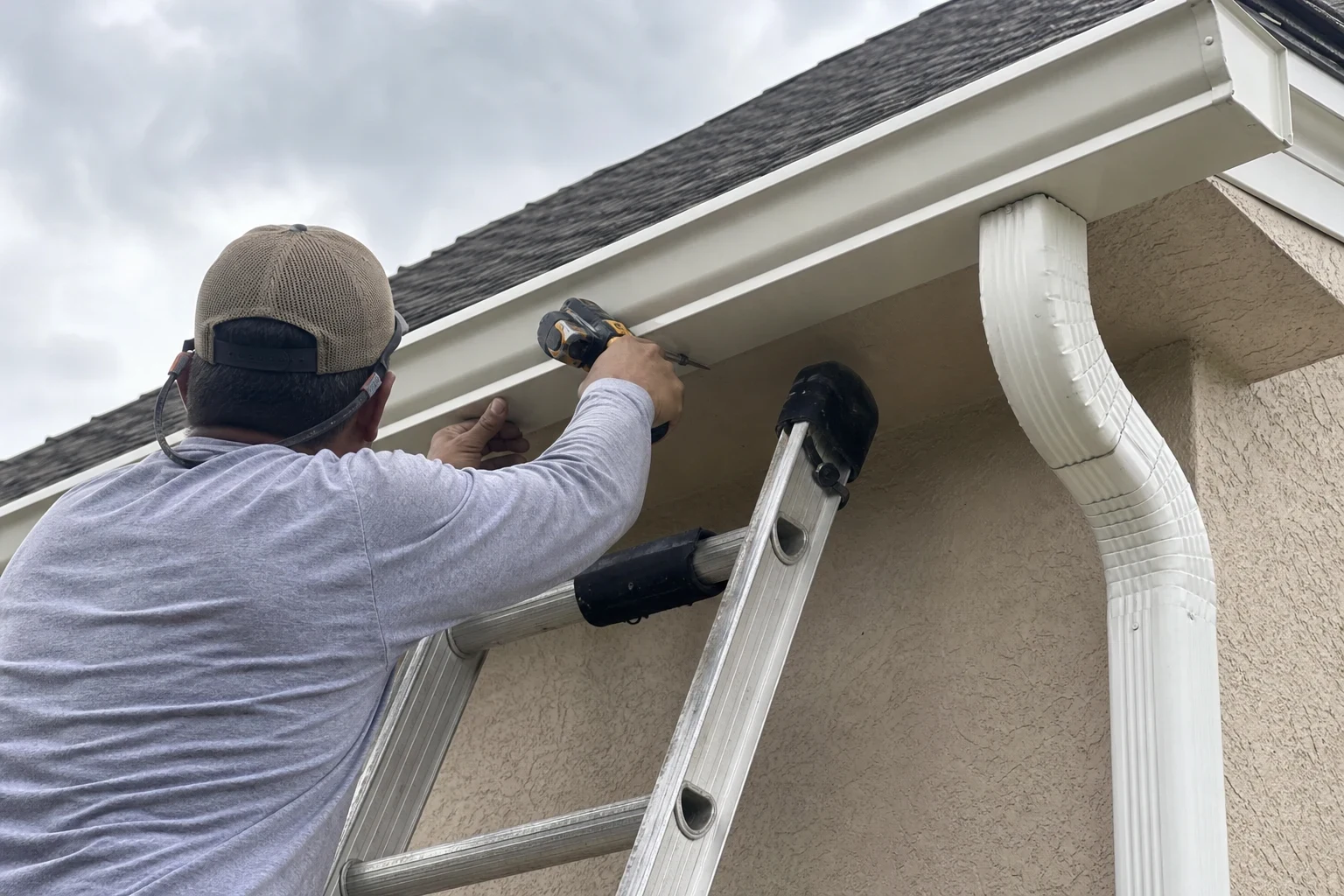
We install continuous aluminum gutters, downspouts and guards that carry heavy rain off your roof edge and away from your foundation. Each run is sized to the roof area above it, pitched to drain and fastened to sound fascia, ideally before hurricane season starts in June.
What a Gutter System Actually Does for Your Roof
A gutter is the last link in your roof's drainage path. Water runs down the shingles or metal panels, crosses the drip edge, drops into the trough, flows to an outlet and leaves through a downspout well away from the slab. When one link fails, the water goes where it was never meant to go: behind the fascia, into the soffit, or straight down beside the foundation.
Summer afternoon thunderstorms dump a lot of rain in a short burst. Undersized 5-inch gutters with one downspout on a long run overflow in those bursts, and the overflow erodes sandy soil and splashes the lower walls. We size gutters to the roof area and pitch above them, not to whatever was hanging there before.
The best window for new gutters is late winter through spring, while the weather is drier and before storm season. Gutter work also pairs well with roof replacement, since the drip edge and gutter apron should be set together with the new gutter line.
Everything in Our Gutter Installs
- 01
Continuous aluminum runs
We form K-style gutters from aluminum coil on site and cut each one to the whole length of the eave, so straight runs have no overlapping joints. The only seams are at corner miters and end caps, and every one gets sealed. Fewer seams mean fewer places for leaks and corrosion to start.
- 02
Sized for the roof above
We measure how much roof area and pitch feed each run. Plenty of homes work better with 6-inch gutters and 3x4-inch downspouts than the 5-inch, 2x3 combination found on many older installs, since the bigger outlet passes debris and handles a downpour.
- 03
Concealed hangers, proper pitch
Hangers screw through the fascia and into the rafter tails, usually 24 inches apart and tighter near corners. Every run falls toward its outlet about a quarter inch per 10 feet, so no water sits in the trough adding weight or breeding mosquitoes.
- 04
Fascia and drip edge checked first
Before anything else, we push an awl into the fascia to find soft wood. Rotted boards are replaced, because screws set in decayed wood pull out in the first strong wind. We also confirm the drip edge or gutter apron directs water into the gutter and not behind it.
- 05
Where downspouts empty
Each downspout finishes with an extension or splash block that moves water away from the slab and keeps it from eroding the soil at your foundation.
- 06
Guards only where they help
Beneath pines and live oaks, guards reduce clogs from needles and leaves. We recommend the style that fits your debris and roof edge, and we tell you when guards are not worth paying for.
Questions about Gutters?
Call(904) 709-7261When Your Gutters Need a Look
Overflow at the front edge
Water pouring over the lip in a normal rain means the gutter is blocked, sagging or undersized for the roof. Spillover at an inside corner usually means a valley is delivering more water than a single outlet can handle.
Drooping sections or loose hangers
A run that dips between supports holds standing water, and that weight loosens the fasteners a bit more each storm. Older spike-and-ferrule hangers are usually to blame.
Streaked or peeling fascia
Dark streaks, bubbling paint or soft wood on the board behind the gutter show water is getting behind it. A missing drip edge or a gutter hung too low under the roof edge is the typical cause.
Rust, pinholes or white residue
Coastal salt air rots galvanized steel and corrodes aluminum anywhere it meets a mismatched fastener. Once pinholes appear along the bottom, the gutter has reached the end.
Eroded soil or a damp slab edge
Channels cut through mulch, a visible footing or puddles that stay along one wall mean a downspout empties too close to the house, or the gutter is not draining.
What Happens on Gutter Install Day
- 1
Measuring and checking
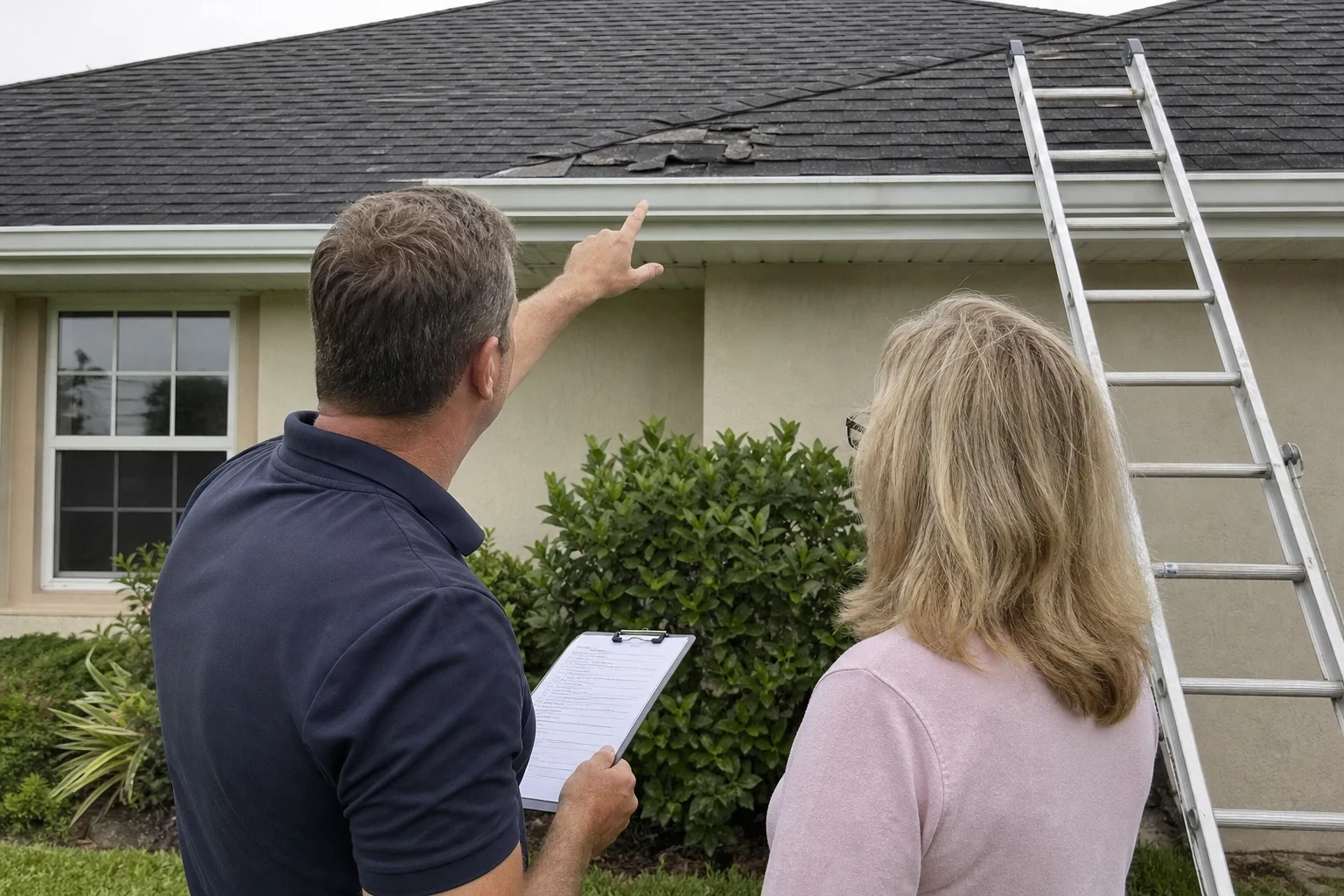
We go along the eaves, measure every run, figure how much roof drains to it and test the fascia and drip edge for weak areas. You then get a written estimate itemizing footage, downspouts, fascia repair and any guards.
- 2
Taking down the old gutters
Old gutters and hangers come down, failed fasteners come out, and rotted fascia board is replaced before new metal is hung.
- 3
Forming and hanging
Using a portable machine, the crew forms continuous runs, cuts them to size, seals miters and end caps, and mounts them on hidden hangers at the planned slope.
- 4
Testing with water and cleaning up
We run water into the high end of each gutter and follow it to the downspout, watching for drips at miters and any pooling. Then the old metal is hauled away and the area swept. Most homes are done in one day.
What Drives Gutter Pricing
Most of a gutter price comes from total footage and the shape of the wood the gutters hang on. We measure at your home and list every item on a written estimate, so each cost is clear before we start. Financing is available if you would like to spread out payments.
- Footage and number of stories
- Longer eaves need more coil and more hangers. Eaves on a second story also take extra ladder work and time.
- Gutter width and outlet size
- Going from a 5-inch to a 6-inch gutter uses wider coil, and 3x4 outlets need larger elbows and drops than 2x3 ones. Each inside or outside corner adds a miter to cut and seal.
- Shape of the fascia
- A new gutter can't hold on rotted fascia, so that wood is replaced first. How much is bad often becomes clear only after the old gutter is off, so we price what we can verify and send photos if more turns up.
- Guards and drainage add-ons
- Gutter guards, downspout extensions and tie-ins to underground drains all raise the total. We only include them where they fix an actual problem at your house.
Common Gutter Questions
Does aluminum make sense this near salt water?
For most houses it does. Aluminum builds a protective oxide film and does not rust through like galvanized steel in salt air. We use matching fasteners so the gutter never touches a dissimilar metal, which is where corrosion tends to begin. Copper also lasts near the coast, but at a much higher price.
Should I replace gutters and the roof together?
If both are worn out, doing them together gives a cleaner finish. Drip edge, gutter apron and fascia go in as one system, and no one has to pull a new gutter off later to slip flashing behind it. If the roof still has years left, gutters can go up on their own, and our Roof Replacement page explains how the two jobs fit together.
With gutter guards, will I ever have to clean my gutters?
Yes, now and then. Guards block most leaves and needles, but fine grit and shingle granules still get in, and pine needles can mat over certain screen types. Expect to rinse them occasionally. Guards pay off when trees hang over the roof and much less on an open lot.
What time of year is best for gutter work?
Late winter into spring, ahead of hurricane season in June. It is drier, dates are easier to get, and your gutters have already handled real rain before summer storms arrive. If a tropical storm has already come through, ask for a free post-storm inspection; we look at the gutter runs and hangers during the same visit as the roof.
Can you repair a leaky joint or sagging run rather than replace it all?
Many times, yes. A dripping end cap can be resealed and a sagging section rehung on new hidden hangers, provided the metal and fascia are still solid. If the gutter is pitted through or the fascia is rotted, a repair won't last, and we will tell you before you pay for one.
Get Your Gutters Ready Before Storm Season
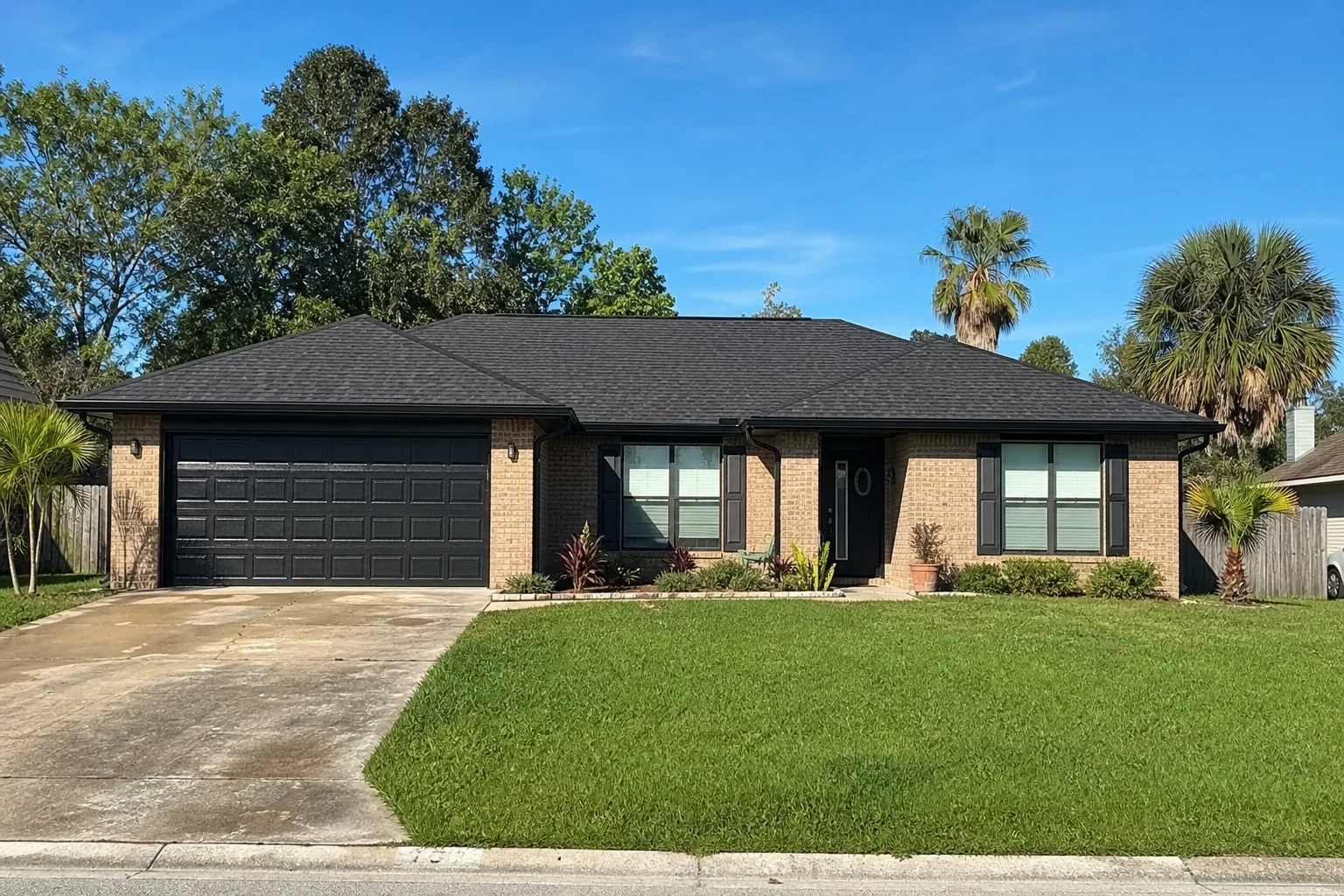
We will measure your runs, check the fascia and drip edge, and give you a written, line-item estimate at no cost. If a storm has already come through, ask for a free post-storm inspection and we will look over the roof and gutters together.